Romance is the biggest genre in audiobooks, and it is also the one where the format changes the book the most. But "best romance audiobooks" lists tend to mix everything together — a dark mafia romance sitting next to a Regency comedy of manners — which is useless if you already know what you like. This guide is organised the way you actually listen: by subgenre, with one strong starting point in each and the narrator credit that makes it work.
What changes between subgenres on audio
Three production styles dominate romance audio, and they map fairly cleanly onto subgenre. Solo narration is standard for single-POV contemporary and most historical romance — one performer carries every voice, which puts a lot of weight on their range. Dual narration is the default for alternating-POV contemporary, sports and new adult: two narrators trade chapters, and the chemistry between the performers becomes part of the chemistry between the characters. Full-cast productions are rarer and mostly appear in dark romance and romantasy, where a large ensemble or multiple POVs justify the cost.
The practical consequence: if you bounced off romance on audio once, you may have bounced off a production style rather than the genre. Someone who finds solo narration flat will usually get on much better with a dual-narrated contemporary, and vice versa. Below, each subgenre entry names the style along with the narrators.
Contemporary rom-com
The most forgiving subgenre for new audiobook listeners. Rom-com prose is dialogue-heavy and fast, which is exactly what audio does well — comic timing lands better spoken than read, and the banter that can feel arch on the page tends to feel natural in a performance. Dual narration is the norm.

The Love Hypothesis — Ali Hazelwood
A third-year PhD student kisses the department’s most feared professor to convince her best friend she is dating, and then has to keep the fiction going. Dalton plays Olive as anxious and quick without making her exhausting, which is the hard part; Hamilton takes Adam and keeps him deadpan rather than brooding. The fake-dating comedy depends entirely on the gap between what the two of them say and what they mean, and two voices make that gap audible in a way the page cannot.
Emotional contemporary
The other half of contemporary romance: less banter, more weight. These books usually run single-POV and solo-narrated, because the whole point is sustained access to one interior voice. Be a little careful with heavier content on audio — you cannot skim a difficult scene the way you can on the page.
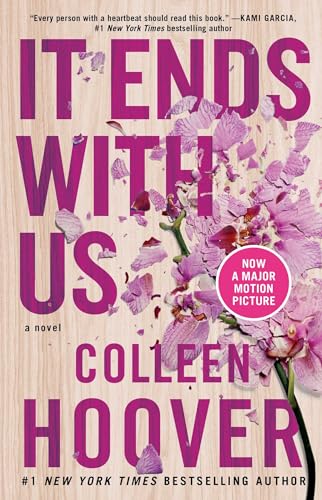
It Ends with Us: A Novel — Colleen Hoover
Lily Bloom builds a life in Boston and falls for a neurosurgeon, and the book gradually reveals what kind of story it actually is. Song narrates in a plain, unornamented register that turns out to be the right choice — the material would be unbearable performed any harder. It is the clearest demonstration of what solo narration is for: one voice, no distance, no escape hatch. Content note for domestic abuse.
Romantasy
The fastest-growing subgenre and the one most changed by audio. Romantasy books are long — twenty hours and up is normal — and they carry invented names, places and magic systems that readers often mispronounce silently for a whole series. A narrator fixes that in the first chapter. If you want the wider category, our guide to romantasy explains where the line with epic fantasy sits.

A Court of Thorns and Roses — Sarah J. Maas
Feyre kills a wolf in the woods and is taken across the wall into the faerie lands as payment. Ikeda narrates the whole series, which matters more than it sounds — a five-book romantasy with a consistent voice builds an attachment that a mid-series narrator change would break. She also handles the Prythian pronunciations, which is the single most common reason readers switch to audio for this series. Around sixteen hours for book one, and it accelerates from there.
Sports romance
Sports romance is arguably the subgenre that audio built. It is almost always dual-POV, the leads are usually written with strongly contrasted voices, and the banter density is high — all of which suits two narrators trading chapters. Hockey dominates; see our hockey romance guide for the wider field.

The Deal — Elle Kennedy
The book a large share of the current hockey-romance boom descends from. Hannah needs tutoring leverage; Garrett, the team captain, needs a passing grade, and the arrangement goes where these arrangements go. Fox and Avalon have been the voices of the Off-Campus series across all five books, so the payoff for starting here is four more in the same register. A good test case for whether dual narration works for you.
Dark romance
The subgenre where production values have risen fastest. Dark romance leans on menace, and menace is a performance effect — a line that reads as merely unpleasant on the page can be genuinely unnerving delivered well. Increasingly these get full-cast treatments. Check content warnings before you start; the intensity scales up on audio.

Haunting Adeline — H. D. Carlton
Adeline inherits her great-grandmother’s manor and starts pulling at a decades-old disappearance, while someone watches her from inside the house. The full-cast production is what to come for — four performers let the book separate its stalker sections from Adeline’s narration entirely, so the shift in perspective is a shift in voice rather than a chapter heading. Heavy content warnings apply: this is the deep end of the subgenre, not an entry point. Our dark romance guide has gentler starting places.
Historical romance
The hardest subgenre to narrate and the one where a good performer adds the most. Period diction, class markers and a large cast of titled relatives all have to be distinguishable by voice alone, usually by a single narrator. It is also the subgenre readers most often bounce off on audio — almost always because of the performance, not the book.

The Devil in Winter — Lisa Kleypas
Evie Jenner proposes marriage to Sebastian, Lord St. Vincent — the villain of the previous book — to escape her relatives. Wells is the standing recommendation for historical romance on audio, and this is the book to test her with: Evie stammers, which is a nightmare to perform and could easily become a gimmick, and Wells makes it a characteristic instead. If historicals have never worked for you in audio, start here before giving up on the subgenre. More in our historical romance guide.
Paranormal romance
Long series, large ensembles, and a lot of invented vocabulary — the same argument as romantasy, but with a different house style. Paranormal tends toward male narrators and a lower, slower register than contemporary, which some listeners strongly prefer and others need to adjust to.

Dark Lover — J.R. Ward
The first Black Dagger Brotherhood book, and the foundation of most modern paranormal romance. Wrath, the blind vampire king, has to protect a half-breed daughter he never wanted responsibility for. Frangione has narrated the series for two decades, which makes this an unusually safe investment on audio: if the voice works for you, there are more than twenty books behind it in the same performance. Our paranormal romance guide covers the alternatives.
Picking the right entry point for you
If you have never finished a romance audiobook, start with a dual-narrated contemporary — The Love Hypothesis or The Deal. Two voices and a comic register are the lowest-friction combination, and both run under twelve hours, so a false start costs very little.
If you already listen and want to expand, the useful move is to switch production style rather than subgenre. Someone who has only listened to dual-narrated contemporary will usually get more out of a good solo performance — Ikeda or Wells — than out of another dual-POV book in a new setting. The format is the variable that actually changes the experience.
And whatever you pick, sample first. Every retailer offers a clip, and thirty seconds is enough to know. Voice preference is idiosyncratic in a way book preference isn’t: a narrator half the internet adores may simply not suit your ear.
For the performers themselves rather than the books, see our guide to the best romance audiobook narrators, or browse the best romance audiobooks overall. You can also filter the whole catalogue by subgenre, trope and heat level.